

The trail to coenzyme Q10 began in the 1950s with a cauliflower. The substance itself turned up in 1957, in beef hearts from a meat-packing plant.
Since then we have known that Q10 is found in practically every cell. Your body makes it itself, it sits in the mitochondria, and most of the Q10 in your blood exists in its second guise, as ubiquinol.
This guide explains what Q10 is, how it was discovered, how much of it is in food, what separates ubiquinone from ubiquinol and which form suits you: classic, ubiquinol, with vitamins or with plant extracts.
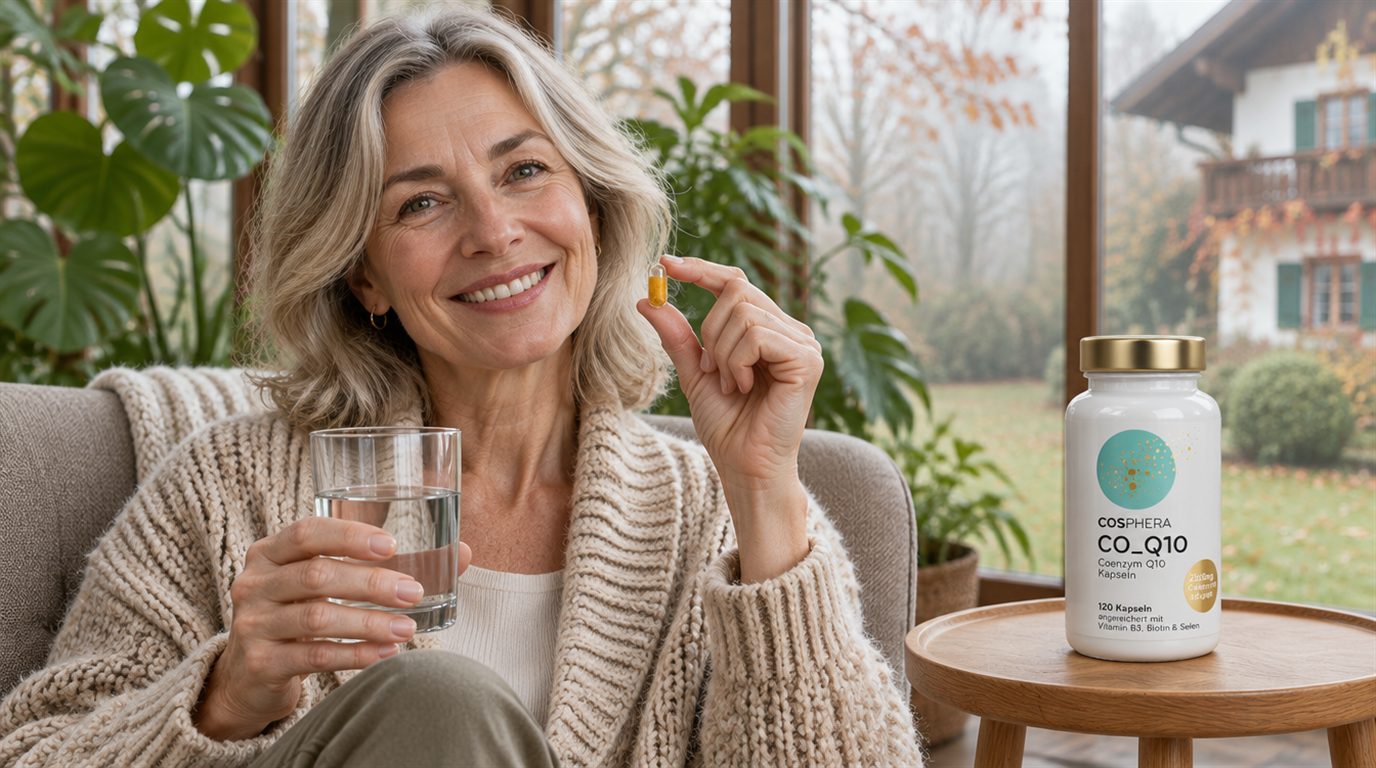
What is coenzyme Q10?
Chemists call coenzyme Q10 ubiquinone-10, and the name works like a short set of building instructions. The Q stands for quinone, a ring-shaped building block. The 10 counts the units in the long side chain attached to that ring. “Ubiquinone” borrows from the Latin ubique, everywhere, because the substance was found in every animal tissue examined.
In its pure state Q10 is a yellow-orange powder that dissolves in fat but not in water. In the body it therefore sits where the fat is: in the membranes of your cells. Q10 is not a vitamin. Vitamins are substances the body cannot make at all, or not in sufficient amounts. Q10 it produces itself, in almost every tissue.
Its workplace: the respiratory chain
Q10 does most of its work in the mitochondria. These are small compartments inside the cell, wrapped in membranes, where food and oxygen are turned into the energy carrier ATP. The final stretch of that route is called the respiratory chain. Q10 is its mobile shuttle: it picks up electrons, moves through the membrane and hands them over at the next protein complex. One figure shows the scale of this machinery: an adult builds up and breaks down around 50 kilograms of ATP every day.

For the curious: when Q10 takes on electrons, ubiquinone becomes ubiquinol, and when it passes them on it turns back into ubiquinone. The British scientist Peter Mitchell described this loop in 1975 as the “Q cycle”.
Home-made: how the body produces Q10
The body builds the ring from the amino acid tyrosine and the side chain via what is known as the mevalonate pathway. In humans, 18 genes involved in the process have been identified so far. Cholesterol is made along the same pathway, and cholesterol-lowering medicines from the statin group act at its very start. About a quarter of the Q10 in the blood comes from food, the rest is produced by the body.
The discovery: a cauliflower, beef hearts and a Nobel Prize
Madison, Wisconsin, in the mid-1950s. At the university's Enzyme Institute, David Green's team is hunting for a missing link in the respiratory chain. One of its members is Frederick Crane, who trained as a plant physiologist. The raw material for the experiments is beef hearts from a meat-packing plant in town, because heart muscle is particularly rich in mitochondria.
In his spare time Crane isolates mitochondria from cauliflower. That solution is yellow, while the one from beef heart is brown. The yellow gives him the idea of looking for fat-soluble substances similar to vitamin A. In 1957 he and three colleagues publish the find: a quinone from the mitochondria of beef heart. It had been yellow there too, only masked by the brown components.
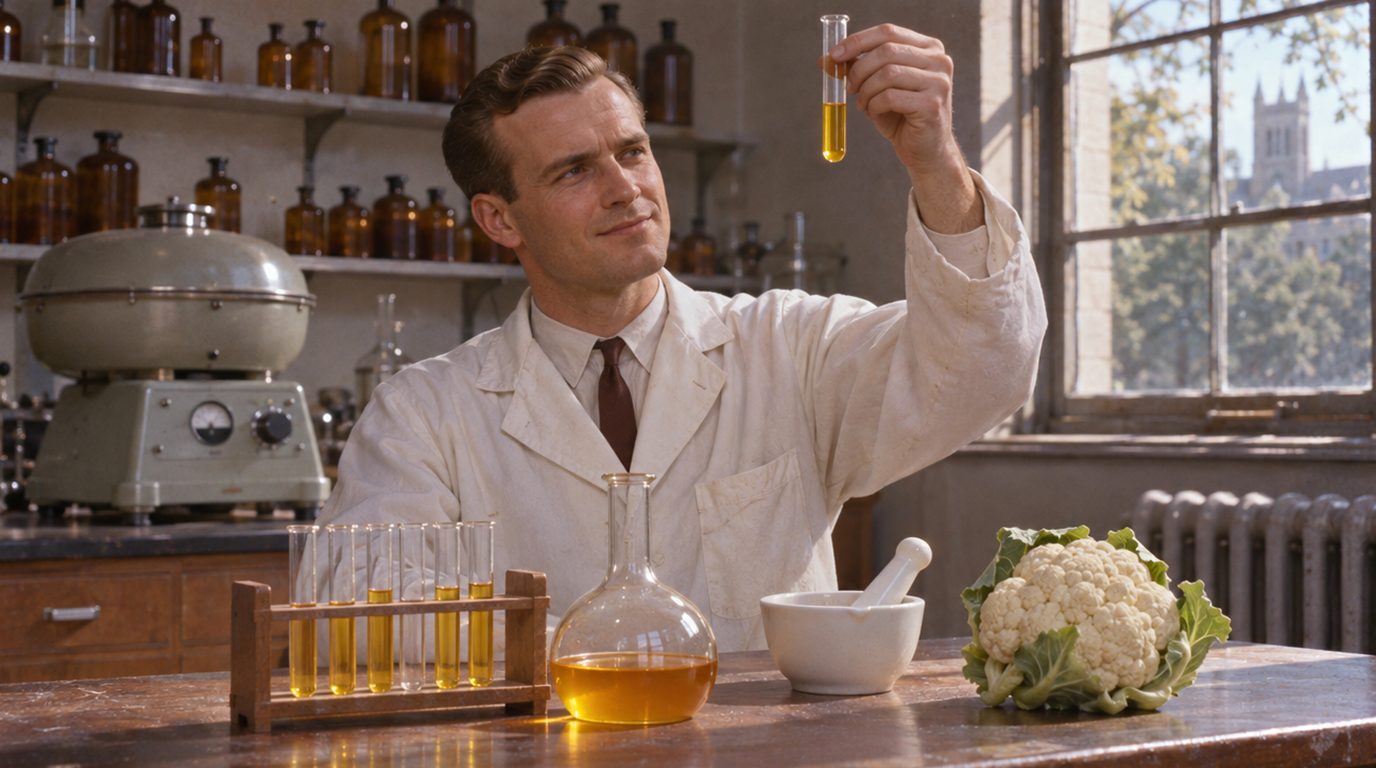
At almost the same time a group led by Richard Morton in Liverpool described the same substance and named it ubiquinone. In 1958 Karl Folkers and his team at the company Merck worked out its chemical structure. And in 1978 Peter Mitchell received the Nobel Prize in Chemistry for his theory of how cells transfer energy, a theory in which Q10 plays a leading part.
Today Q10 is often produced by fermentation, for example with yeast. Since the mid-2000s, ubiquinol has been available as an ingredient for food supplements alongside classic ubiquinone.
Q10 in the body: heart, kidney and liver lead the way
Q10 is not spread evenly around the body. Heart, kidney and liver contain the most, at 60 to 110 micrograms per gram of tissue. The lungs contain the least, about 8 micrograms. That fits its workplace: in heart muscle cells, mitochondria take up roughly a third of the space.
How the content changes over a lifetime was measured in tissue samples by a group at the Karolinska Institute in Stockholm in 1989. In most organs it was highest at around 20 years of age and then declined steadily. In heart muscle the researchers found 110 micrograms per gram in people aged 19 to 21 and 47 in those aged 77 to 81.

These figures describe what was measured in tissue. Blood tells a different story: among 860 adults from Europe, the values were highest in middle age.
Q10 in food: from beef heart to rapeseed oil
On average you take in 3 to 6 milligrams of Q10 a day with your food. In Denmark, 64 per cent of that came from meat and poultry. The richest sources are organ and muscle meat, oily fish, nuts and some vegetable oils. Fruit, vegetables, cereals and dairy products contain only a little.

A hundred grams is a unit for comparison, and nobody eats that much oil. What actually ends up on your plate is shown by these servings from the overview published by the Linus Pauling Institute at Oregon State University:
To put the numbers side by side: a typical capsule contains 100 milligrams of Q10. On paper that equals just under 900 grams of beef heart or around 3 kilograms of beef. Your body, however, makes most of its Q10 itself anyway.
Ubiquinone and ubiquinol: two forms, one substance
Labels use two names. Both mean coenzyme Q10, just in a different state. Ubiquinone is the oxidised form: yellow-orange, stable and the standard for decades. Ubiquinol is the reduced form, with two extra hydrogen atoms. It reacts readily with oxygen, which is why it is dissolved in oil and sold in tightly sealed capsules.
In the body the two belong together. In the respiratory chain Q10 switches back and forth between both forms all the time, because that is its job. In a study of 860 adults, around 87 per cent of the Q10 in their blood was present as ubiquinol.
What research is doing
Coenzyme Q10 is one of the widely studied substances in biochemistry. In November 2026 the PubMed database lists more than 5,000 publications that mention coenzyme Q10 in the title or abstract. Add ubiquinone, ubiquinol and coenzyme Q, and the figure rises to around 18,000. They include more than 400 randomised controlled trials.
Researchers measure many things: the content in tissues and in blood, the processes inside mitochondria and the uptake of different forms. Many clinical trials come from medicine and deal with special situations. They cannot simply be transferred to everyday life.
What the EU confirms: vitamins and minerals in Q10 products
Many Q10 products also contain vitamins and minerals. For these nutrients the EU has authorised statements after scientific assessment. Each one applies to the nutrient named, and here they are word for word:
In our range you will find these nutrients here, for example: vitamin E and selenium in Espara Q10 30mg, thiamine, magnesium and vitamin B12 in Espara Co-enzyme Q10-100mg, niacin and selenium in Cosphera Coenzyme Q10, and vitamin E in the Vital Q10 + Vitamin E drops. The amounts per daily dose are listed on each product page.
Which form suits you?
If you would rather not swallow capsules, Q10 also comes as drops in olive oil. Whatever the form, store it somewhere dark and cool, because Q10 likes neither light nor warmth.
Our recommendations
Four products, four combinations: 250 mg of ubiquinone with niacin, biotin and selenium, Q10 with plant extracts, Q10 with vitamin E and selenium, and Q10 with the B complex.


Cosphera Coenzyme Q10 250mg provides 32 mg of niacin (200 % of the reference intake) and 55 µg of selenium (100 %) per daily dose. Niacin contributes to normal energy-yielding metabolism. Selenium contributes to the protection of cells from oxidative stress. Espara Q10 30mg provides 20 mg of vitamin E (167 %) and 100 µg of selenium (182 %) per daily dose. Vitamin E contributes to the protection of cells from oxidative stress. Cosmoterra Coenzym Q10 Plus provides 1.1 mg of thiamine (100 %) per daily dose. Thiamine contributes to the normal function of the heart.
Amounts per daily dose as stated by the manufacturer. You will find the exact directions for use on each product page.
More Q10 products at a glance
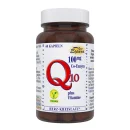 Espara Co-enzyme Q10-100mg200 mg Q10 per day · 2 capsules · with magnesium and B vitamins
 Espara Coenzyme Q10-200mg400 mg Q10 per day · 2 capsules · with vitamin B1 and folic acid
 Vital Q10 Ubiquinone 100mg100 mg ubiquinone per day · 1 capsule · lasts 90 days
 Vital Q10 Kaneka Ubiquinol100 mg ubiquinol per day · 1 capsule · lasts 60 days
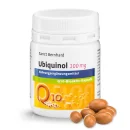 Kräuterhaus Ubiquinol 100 mg100 mg ubiquinol per day · 1 capsule · lasts 75 days
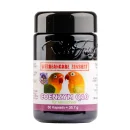 Robert Franz Coenzyme Q10100 mg Q10 per day · 1 capsule · in violet glass
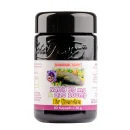 Robert Franz NADH & Q10100 mg Q10 and 20 mg NADH per day · 1 capsule
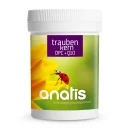 anatis Grape Seed OPC + Q1080 mg Q10 per day · 2 capsules · with grape seed extract
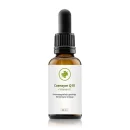 Vital Q10 + Vitamin E drops120 mg Q10 per day · 22 drops · in olive oil
Cosmoterra Coenzym Q10 Plus is also available as a pack of 225 capsules.
Having Q10 measured in your blood
How much Q10 is in your own blood can be determined in a laboratory. The Medivere Coenzyme Q10 blood test is a kit for use at home: you take the sample from your fingertip, post it to the partner laboratory in the envelope provided and view the report online. The kit is only available for Austria and Germany, and its product page is in German.
Four myths about Q10
Good to know when taking Q10
Read more at Viterna
Frequently asked questions
- Q10 is also called ubiquinone-10. The 10 stands for the ten units in its side chain.
- Ubiquinone and ubiquinol are the same substance in two states. In the blood, ubiquinol predominates.
- Meat, oily fish, nuts and some oils supply the most Q10. Beef heart leads with 11.3 mg per 100 g.
- Vitamin E, selenium, thiamine, niacin and magnesium in Q10 products have their own EU-authorised statements.