By selecting "Accept all", you give us permission to use the following services on our website: Strictly necessary cookies, YouTube, Vimeo, ReCaptcha, Google Analytics, Google Ads, Google Tag Manager, Brevo, Meta Pixel, PayPal Express Checkout und Ratenzahlung. You can change the settings at any time (fingerprint icon in the bottom left corner). For further details, please see Individual configuration and our Privacy notice.
The settings you specify here are stored in the "local storage" of your device. The settings will be remembered for the next time you visit our online shop. You can change these settings at any time (fingerprint icon in the bottom left corner).
For more information on cookie lifetime and required essential cookies, please see the Privacy notice.
To view YouTube contents on this website,
you need to consent to the transfer of data and storage of third-party cookies by
YouTube (Google).
This allows us to improve your user experience and to make our
website better and more interesting.
Without your consent, no data will be transferred to YouTube.
However, you will also not be able to use the YouTube services on this website.
To view Vimeo contents on this website, you need to consent to the
transfer of data and storage of third-party cookies by Vimeo..
This allows us to improve your user
experience and to make our website better and more interesting.
Without your consent, no data will
be transferred to Vimeo. However, you will also not be able to use the Vimdeo services on this website.
To submit forms on this page, you need to consent to the transfer of data and storage of third-party cookies by Google.
With your consent, reCAPTCHA, a Google service to avoid spam messages via contact forms, will be embedded.
This service allows us to provide our customers with a safe way to contact us via online forms. At the same time, the service prevents spam bots from compromising our services.
After you gave your permission, you might be asked to answer a security prompt to send the form.
If you do not consent, unfortunately you cannot use the form. Please contact us in a different way.
This is a web analysis service. It allows the user to measure advertising return on investment (ROI) and track user behavior. Data collected: anonymized IP address, date and time of visit, usage data, click path, app updates, browser information, device information, JavaScript support, pages visited, referrer URL, location information, purchase activity, widget interactions.
This is an advertising service. This service can be used to display personalized or non-personalized advertising to users. With Google Ads Conversion Tracking, we can measure our advertising success in the Google advertising network. We place advertisements in the Google advertising network so that our offers can be found more easily. We try to optimize our advertising as much as possible. Also to keep advertising costs as low as possible. This is reflected in our prices.
This is a tag management system. The Google Tag Manager allows tags to be integrated centrally via a user interface. Tags are small sections of code that can track activities. Script codes from other tools are integrated via the Google Tag Manager. The Tag Manager makes it possible to control when a specific tag is triggered.
To send data to Brevo, you need to consent to the transfer of data and storage of third-party cookies by Brevo. This allows us to improve your user experience and to make our website better and more interesting.
To send data to Meta, you need to consent to the transfer of data and storage of third-party cookies by Meta.. This allows us to improve your user experience and to make our website better and more interesting.
In order to unlock offers for extended payment options, in particular express checkout and payment in instalments, we require your consent to the data transfer and storage of third-party cookies of the payment provider PayPal. This allows us to also offer you express checkout and payment by instalments. Without your consent, only the technically necessary data transfer to PayPal will take place, but you will then not be able to use the express checkout or extended offers for payment by instalments on this site.
Description:
Using express checkout and Displaying offers for payment in instalments for individual items or your entire purchase.
Would you like to see these contents? Activate the desired contents for one session only or allow the website to remember these settings. Once you have given your consent, the third-party data can be loaded. For this, third-party cookies might be stored on your device. You can change these settings at any time (fingerprint icon in the bottom left corner). For further details, please see the Privacy notice.
Long day, lights off, yet your mind is still wide awake? Time to meet a small molecule with a big job.
Melatonin is the signal your body uses every evening to announce "night". It makes it by itself once darkness falls, and light decides when. As a supplement, melatonin comes as capsules, sprays, drops or pastilles.
This guide explains how the sleep hormone works, what the EU officially confirms, how to make your evenings light-friendly and which product suits you best.
Symbolic image: AI-generated
What is melatonin?
Melatonin is a hormone your body makes itself, mainly in the pineal gland, a pea-sized organ deep inside the brain. The recipe is short: the amino acid L-tryptophan becomes serotonin, and serotonin becomes melatonin. That is where the "-tonin" in its name comes from.
It was discovered in 1958 by the American physician Aaron Lerner at Yale University. His team needed more than 100 kilograms of cattle pineal glands to obtain just about 100 micrograms, a tenth of a milligram. The "mela-" part came from a side finding: the substance lightened the skin of frogs, much like melanin.
1958
discovered at Yale University
2 to 4 am
when levels peak at night
approx. 45 min
half-life of melatonin taken by mouth
700+
studies listed on ClinicalTrials.gov
Light sets the pace
Whether your body makes melatonin depends above all on light. Your retina contains special cells with a pigment called melanopsin. They are not there for seeing; they simply measure how bright it is, and they are most sensitive to blue light, the kind found in daylight and many screens. While it is bright, melatonin stays low. When it gets dark, levels rise.
Did you know? Toddlers have the highest melatonin levels of all. By early adulthood, the night-time amount drops by around 80 %, and it keeps falling in later life. And cows give milk at night with about ten times more melatonin than during the day.
What the EU officially confirms about melatonin
There are two statements on melatonin that the European Food Safety Authority has assessed and the EU has authorised. Both apply only under precise conditions.
🌙 Falling asleep
Melatonin contributes to the reduction of time taken to fall asleep.
Condition: The beneficial effect is obtained by consuming 1 mg of melatonin close to bedtime.
✈️ Travelling across time zones
Melatonin contributes to the alleviation of subjective feelings of jet lag.
Condition: The beneficial effect is obtained with a minimum intake of 0.5 mg taken close to bedtime on the first day of travel and on the following few days after arrival at the destination.
Our take: Melatonin is one of very few sleep-related substances with an authorised claim at all. What matters is the amount, 1 mg, and the timing, close to bedtime. Our recommendations further down are built around exactly that.
Your evening: helping your body clock
The good news is that much of what shapes your own melatonin is in your hands. These habits are well researched and cost nothing.
✓
Get out into the morning light
Bright daylight in the morning helps your body clock settle into the day. A short walk or breakfast by the window is enough.
✓
Dim the lights, swap the tablet for a book
In a Harvard Medical School study, adults who read on a light-emitting tablet for four hours in the evening saw their melatonin rise later and their body clock shift, compared with reading a printed book.
✓
Keep coffee to the afternoon
In a small study, a double espresso three hours before bedtime set the body clock back by around 40 minutes.
✓
Regular times, enough hours
Consistent bedtimes give your body a reliable rhythm. Sleep societies recommend 7 to 9 hours for adults.
✓
A properly dark bedroom
Blackout curtains or a sleep mask keep out street lights and little standby LEDs.
Symbolic image: AI-generated
Melatonin from food?
Some foods really do contain melatonin, such as sour cherries, tomatoes, walnuts and strawberries. The amounts are measured in nanograms, though, billionths of a gram. One gram of Montmorency sour cherries holds about 13.5 nanograms, so you would need more than 70 kilograms of cherries for 1 mg.
That is why Espara uses a concentrated extract of exactly this sour cherry for one of its capsules, giving you melatonin from the fruit in a single capsule.
How much and when?
With melatonin it is not about "a lot" but about "just right". The authorised claim on falling asleep applies to 1 mg close to bedtime. Interestingly, even a fraction of a milligram roughly matches what the body makes itself at night. Melatonin taken by mouth is also broken down quickly, with a half-life of about three quarters of an hour.
1 mg
For falling asleep
Close to bedtime, as the authorised claim describes. Most of our products provide exactly this amount.
from 0.5 mg
When travelling
Close to bedtime on the first day of travel and for the first few days at your destination. Half a Robert Franz cherry pastille contains exactly 0.5 mg.
3 and 5 mg
Higher amounts
One capsule in the evening, as stated by the manufacturer. The jet lag claim applies here too, as it starts at 0.5 mg. Follow the directions on the pack.
Capsule, spray, drops or pastille: which suits you?
💊
Capsule
One capsule and done. Always the same amount, often combined with plant extracts such as hops and lemon balm.
Right for you if you like a fixed evening ritual with a glass of water.
💨
Spray
Sprayed straight into the mouth, no water and no swallowing. Small enough for the bedside table and hand luggage.
Right for you if you dislike swallowing capsules or travel a lot.
💧
Drops
Measured drop by drop, neat or in a little water or tea. Some come with vanilla or with vitamin B6.
Right for you if you prefer a liquid you can adjust.
🍒
Pastille
Let it melt slowly in your mouth, with a cherry taste. It can be halved, giving 0.5 or 1 mg.
Right for you if you want to choose the amount yourself, for example when travelling.
Our picks with 1 mg
All four provide exactly the amount per serving that the authorised claim on falling asleep refers to. They differ mainly in format and extras.
Melatonin contributes to the reduction of time taken to fall asleep. The beneficial effect is obtained by consuming 1 mg of melatonin close to bedtime. Vitamin B6 contributes to normal functioning of the nervous system.
Amounts as stated by the manufacturer. You will find the exact directions on each product page.
Curious about your own pattern? The melatonin saliva test
Medivere melatonin saliva test
Melatonin in saliva mirrors the level in the blood. You collect saliva samples at home following the instructions and send them to the partner laboratory. After about 5 to 7 days you receive a report assessing your profile.
Fact: The authorised claim on falling asleep refers to exactly 1 mg close to bedtime. Even a fraction of a milligram roughly matches what the body makes itself at night.
Myth 2
"Pistachios are packed with melatonin."
Fact: A 2014 study reported extremely high levels. In 2017 a court-appointed laboratory found no measurable melatonin in eight samples. Foods contain only tiny amounts.
Myth 3
"Melatonin is a sleeping pill."
Fact: Melatonin is the body's own messenger that signals "night". It is not a sedative and is broken down again quickly.
Good to know before you take it
✓
Only close to bedtime
Melatonin makes you drowsy, so do not drive or operate machinery afterwards.
✓
Taking medication? Check first
Melatonin is broken down in the liver, and hormonal products such as the pill affect its levels. If you take medication regularly, check before adding melatonin rather than combining them quietly.
✓
Not meant for everyone
Pregnant and breastfeeding women, children and teenagers should not take melatonin products. No alcohol alongside.
✓
Stick to the directions
Each product has its own amount per evening, printed on the pack and shown on our product page. Taking more is not intended.
Frequently asked questions
What is melatonin in simple terms?+
A hormone the body makes itself, mainly in the pineal gland in the brain. Darkness makes levels rise and daylight brings them down again, which is how melatonin tells the body that it is night.
How much melatonin, and when?+
Melatonin contributes to the reduction of time taken to fall asleep. The beneficial effect is obtained by consuming 1 mg of melatonin close to bedtime. Follow the directions for your product.
Can melatonin help when travelling?+
Melatonin contributes to the alleviation of subjective feelings of jet lag. The beneficial effect is obtained with a minimum intake of 0.5 mg taken close to bedtime on the first day of travel and on the following few days after arrival at the destination.
Capsule, spray or drops: which is best?+
It is a matter of taste; what counts is the amount per serving. Capsules are simplest, sprays and pastilles need no swallowing, drops are flexible. Our four picks all provide 1 mg per serving.
Can I get melatonin from food?+
Only in tiny amounts. Sour cherries, tomatoes and walnuts contain melatonin in the nanogram range. For 1 mg you would need more than 70 kg of sour cherries.
Why does light matter so much?+
Special cells in the retina measure brightness, especially blue light. While it is bright, melatonin stays low, so morning light and dimmed evening light support your natural rhythm.
Who should not take melatonin?+
Pregnant and breastfeeding women, children and teenagers. If you take medication regularly, check first. Do not drive after taking it.
What does a melatonin saliva test measure?+
Melatonin in saliva mirrors the level in the blood. You provide samples following the instructions, the laboratory analyses them and sends you a report on your profile after about 5 to 7 days.
In a nutshell
Melatonin is your body's own night signal, and light sets its pace. Morning light, dimmed evenings and regular times support your rhythm. If you would like to supplement, choose 1 mg close to bedtime.
KEY TAKEAWAYS
Darkness raises melatonin, light lowers it.
The EU confirms: 1 mg close to bedtime contributes to the reduction of time taken to fall asleep.
For travel, the jet lag claim applies from 0.5 mg.
Pick the format you like: capsule, spray, drops or pastille.
Note: This page provides general information. Food supplements should not be used as a substitute for a varied and balanced diet and a healthy lifestyle. Do not exceed the recommended daily intake. Keep out of reach of young children. This page does not replace medical advice. Sources include: Regulation (EU) No 432/2012, Circadin summary of product characteristics (EMA), German Federal Institute for Risk Assessment (2024), Chang et al., PNAS (2015), Burke et al., Science Translational Medicine (2015), Burkhardt et al. (2001), ClinicalTrials.gov (accessed November 2026).


 Espara melatonin spray1 mg in 4 sprays · spearmint · vegan
 Robert Franz melatonin drops1 mg in 6 drops · in MCT oil · 50 ml
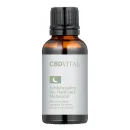
 Vital melatonin drops1 mg in 5 drops · vanilla flavour · 30 ml
 Espara melatonin 3 mg plant-based3 mg from Montmorency sour cherry · 1 capsule · vegan
 Espara melatonin 3 mg3 mg · with hops and lemon balm · 1 capsule
 Espara melatonin 5 mg5 mg · with hops and lemon balm · 1 capsule
