By selecting "Accept all", you give us permission to use the following services on our website: Strictly necessary cookies, YouTube, Vimeo, ReCaptcha, Google Analytics, Google Ads, Google Tag Manager, Brevo, Meta Pixel, PayPal Express Checkout und Ratenzahlung. You can change the settings at any time (fingerprint icon in the bottom left corner). For further details, please see Individual configuration and our Privacy notice.
The settings you specify here are stored in the "local storage" of your device. The settings will be remembered for the next time you visit our online shop. You can change these settings at any time (fingerprint icon in the bottom left corner).
For more information on cookie lifetime and required essential cookies, please see the Privacy notice.
To view YouTube contents on this website,
you need to consent to the transfer of data and storage of third-party cookies by
YouTube (Google).
This allows us to improve your user experience and to make our
website better and more interesting.
Without your consent, no data will be transferred to YouTube.
However, you will also not be able to use the YouTube services on this website.
To view Vimeo contents on this website, you need to consent to the
transfer of data and storage of third-party cookies by Vimeo..
This allows us to improve your user
experience and to make our website better and more interesting.
Without your consent, no data will
be transferred to Vimeo. However, you will also not be able to use the Vimdeo services on this website.
To submit forms on this page, you need to consent to the transfer of data and storage of third-party cookies by Google.
With your consent, reCAPTCHA, a Google service to avoid spam messages via contact forms, will be embedded.
This service allows us to provide our customers with a safe way to contact us via online forms. At the same time, the service prevents spam bots from compromising our services.
After you gave your permission, you might be asked to answer a security prompt to send the form.
If you do not consent, unfortunately you cannot use the form. Please contact us in a different way.
This is a web analysis service. It allows the user to measure advertising return on investment (ROI) and track user behavior. Data collected: anonymized IP address, date and time of visit, usage data, click path, app updates, browser information, device information, JavaScript support, pages visited, referrer URL, location information, purchase activity, widget interactions.
This is an advertising service. This service can be used to display personalized or non-personalized advertising to users. With Google Ads Conversion Tracking, we can measure our advertising success in the Google advertising network. We place advertisements in the Google advertising network so that our offers can be found more easily. We try to optimize our advertising as much as possible. Also to keep advertising costs as low as possible. This is reflected in our prices.
This is a tag management system. The Google Tag Manager allows tags to be integrated centrally via a user interface. Tags are small sections of code that can track activities. Script codes from other tools are integrated via the Google Tag Manager. The Tag Manager makes it possible to control when a specific tag is triggered.
To send data to Brevo, you need to consent to the transfer of data and storage of third-party cookies by Brevo. This allows us to improve your user experience and to make our website better and more interesting.
To send data to Meta, you need to consent to the transfer of data and storage of third-party cookies by Meta.. This allows us to improve your user experience and to make our website better and more interesting.
In order to unlock offers for extended payment options, in particular express checkout and payment in instalments, we require your consent to the data transfer and storage of third-party cookies of the payment provider PayPal. This allows us to also offer you express checkout and payment by instalments. Without your consent, only the technically necessary data transfer to PayPal will take place, but you will then not be able to use the express checkout or extended offers for payment by instalments on this site.
Description:
Using express checkout and Displaying offers for payment in instalments for individual items or your entire purchase.
Would you like to see these contents? Activate the desired contents for one session only or allow the website to remember these settings. Once you have given your consent, the third-party data can be loaded. For this, third-party cookies might be stored on your device. You can change these settings at any time (fingerprint icon in the bottom left corner). For further details, please see the Privacy notice.
Buy sports nutrition: protein powders, creatine, amino acids, magnesium and isotonic drinks for training and competition. Protein contributes to a growth in muscle mass, and magnesium contributes to normal muscle function. The guide below shows what fits when. Read the guide ↓
A morning run, a gym session after work or a mountain hike at the weekend: here you will find what your training really needs.
For six nutrients, the EU has officially confirmed what they do for sport and exercise: protein for muscle mass, creatine for short bursts of power, carbohydrate-electrolyte solutions for long endurance sessions, magnesium and potassium for muscle function, and vitamin C for the immune system during intense exercise.
This guide explains when each nutrient matters, how much is recommended per day and which products work well together.
Symbolic image: AI-generated
What fits when: your training day
Not every nutrient belongs to every moment. Some count through the daily amount, others matter during a long session and others after training. The graphic gives you the overview.
3 g
creatine per day, the amount in the EU claim
300 to 350 mg
magnesium recommended per day (women, men)
0.8 g
protein per kg of body weight recommended per day
150 to 200 ml
every 15 to 20 minutes during long efforts (Aktiv3)
Six nutrients for active people
The quotes are the official EU health claims, word for word. Below each one you will find the recommended daily intake and the foods that provide it.
Protein
“Protein contributes to a growth in muscle mass.”
Recommended per day: 0.8 g per kg of body weight, 1 g from the age of 65.
Found in: pulses, dairy, eggs, fish and meat.
Creatine
“Creatine increases physical performance in successive bursts of short-term, high intensity exercise.”
Important: The beneficial effect is obtained with a daily intake of 3 g of creatine.
Found in: meat and fish. The body also makes some creatine itself.
Carbohydrate-electrolyte solutions
“Carbohydrate-electrolyte solutions contribute to the maintenance of endurance performance during prolonged endurance exercise.”
“Carbohydrate-electrolyte solutions enhance the absorption of water during physical exercise.”
What this means: drinks with carbohydrates and sodium in balanced amounts, often called isotonic.
Magnesium
“Magnesium contributes to normal muscle function.”
“Magnesium contributes to the reduction of tiredness and fatigue.”
Recommended per day: women 300 mg, men 350 mg.
Found in: wholegrains, nuts, pulses and some mineral waters.
Potassium
“Potassium contributes to normal muscle function.”
Recommended per day: 4,000 mg for adults.
Found in: potatoes, bananas, vegetables and pulses.
Vitamin C
“Vitamin C contributes to maintain the normal function of the immune system during and after intense physical exercise.”
Recommended per day: women 95 mg, men 110 mg.
Found in: peppers, citrus fruit, berries and cabbage.
One for every part of your training: four products compared
Magnesium for every day, creatine for short bursts of power, amino acids as a protein source and an isotonic drink for long sessions. The boxes show the amounts per daily serving.
Looking for more protein? We compare plant-based and whey protein powders with around 24 g of protein per serving in detail in our protein powder category.
Three myths about sports nutrition
Myth 1
“Creatine is only for bodybuilders.”
Fact: The EU claim refers to successive bursts of short, high intensity exercise. Sprints and jumps are just as much part of ball sports, interval training and climbing.
Myth 2
“Water is always enough.”
Fact: For short sessions, water is fine. During prolonged endurance exercise, carbohydrate-electrolyte solutions contribute to the maintenance of endurance performance.
Myth 3
“More protein means more muscle.”
Fact: Muscles grow through training, and protein provides the building material. The recommendation is 0.8 g per kg of body weight per day. Extra protein does not replace training.
Good to know
✓
Creatine: the daily amount counts
What matters is 3 g of creatine every day, including rest days. The timing is up to you, and the easiest way is with the same meal each day.
✓
Drinking during long sessions
For competitions lasting over an hour, Aktiv3 recommends 250 to 500 ml in the hour before the start and 150 to 200 ml every 15 to 20 minutes during exercise.
✓
Getting the magnesium dose right
EFSA sets an upper limit of 250 mg per day for magnesium from food supplements. Above that, some people may get loose stools. If you take several products, add up the amounts.
✓
A supplement, not a substitute
Sports nutrition is handy when training and everyday life leave little time. A varied diet with enough fluid remains the foundation.
For strength training, protein and creatine come first. For long endurance sessions, carbohydrate-electrolyte solutions matter. Magnesium and potassium contribute to normal muscle function in every sport.
How much creatine should I take per day?+
The beneficial effect is obtained with a daily intake of 3 g of creatine. Six nutri+ Creapure® capsules provide 4.5 g of creatine, and the powder lets you dose freely.
What is an isotonic drink?+
A drink with a concentration of dissolved particles similar to that of blood. The Aktiv3 isotonic drinks contain carbohydrates and sodium, and half a litre provides 33 g of carbohydrates. One 900 g tub makes 12.5 litres.
How much magnesium do I need when I train?+
The recommendation is 300 mg per day for women and 350 mg for men, from food and drink combined. According to EFSA, no more than 250 mg per day should come from food supplements, which is exactly the daily serving of Optiolex Magnesium 7 Complex.
Are MAP amino acids the same as protein powder?+
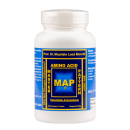
Both provide protein, but in a different form. MAP contains eight essential amino acids, free and unbound, in tablets, and 5 tablets provide 5 g of protein. Protein powder provides around 24 g of protein per serving as a shake.
Do you deliver sports nutrition to Austria and Germany?+
Yes. Viterna ships from Eibiswald in Styria. Delivery within Austria is free from €70, and to Germany from €120.
In short
Protein and creatine for strength, carbohydrate-electrolyte solutions for long endurance sessions, magnesium and potassium for muscle function.
KEY POINTS
Creatine: 3 g per day, every day.
Magnesium: 300 to 350 mg recommended per day, no more than 250 mg of it from supplements.
Protein: 0.8 g per kg of body weight per day, 1 g from the age of 65.
Long sessions: drink small amounts regularly.
Note: Health claims refer exclusively to protein, creatine, carbohydrate-electrolyte solutions, magnesium, potassium and vitamin C and comply with Regulation (EU) No 432/2012. Intake recommendations: D-A-CH reference values. Food supplements are not a substitute for a varied and balanced diet and a healthy lifestyle. Do not exceed the recommended daily intake. Keep out of the reach of young children.