By selecting "Accept all", you give us permission to use the following services on our website: Strictly necessary cookies, YouTube, Vimeo, ReCaptcha, Google Analytics, Google Ads, Google Tag Manager, Brevo, Meta Pixel, PayPal Express Checkout und Ratenzahlung. You can change the settings at any time (fingerprint icon in the bottom left corner). For further details, please see Individual configuration and our Privacy notice.
The settings you specify here are stored in the "local storage" of your device. The settings will be remembered for the next time you visit our online shop. You can change these settings at any time (fingerprint icon in the bottom left corner).
For more information on cookie lifetime and required essential cookies, please see the Privacy notice.
To view YouTube contents on this website,
you need to consent to the transfer of data and storage of third-party cookies by
YouTube (Google).
This allows us to improve your user experience and to make our
website better and more interesting.
Without your consent, no data will be transferred to YouTube.
However, you will also not be able to use the YouTube services on this website.
To view Vimeo contents on this website, you need to consent to the
transfer of data and storage of third-party cookies by Vimeo..
This allows us to improve your user
experience and to make our website better and more interesting.
Without your consent, no data will
be transferred to Vimeo. However, you will also not be able to use the Vimdeo services on this website.
To submit forms on this page, you need to consent to the transfer of data and storage of third-party cookies by Google.
With your consent, reCAPTCHA, a Google service to avoid spam messages via contact forms, will be embedded.
This service allows us to provide our customers with a safe way to contact us via online forms. At the same time, the service prevents spam bots from compromising our services.
After you gave your permission, you might be asked to answer a security prompt to send the form.
If you do not consent, unfortunately you cannot use the form. Please contact us in a different way.
This is a web analysis service. It allows the user to measure advertising return on investment (ROI) and track user behavior. Data collected: anonymized IP address, date and time of visit, usage data, click path, app updates, browser information, device information, JavaScript support, pages visited, referrer URL, location information, purchase activity, widget interactions.
This is an advertising service. This service can be used to display personalized or non-personalized advertising to users. With Google Ads Conversion Tracking, we can measure our advertising success in the Google advertising network. We place advertisements in the Google advertising network so that our offers can be found more easily. We try to optimize our advertising as much as possible. Also to keep advertising costs as low as possible. This is reflected in our prices.
This is a tag management system. The Google Tag Manager allows tags to be integrated centrally via a user interface. Tags are small sections of code that can track activities. Script codes from other tools are integrated via the Google Tag Manager. The Tag Manager makes it possible to control when a specific tag is triggered.
To send data to Brevo, you need to consent to the transfer of data and storage of third-party cookies by Brevo. This allows us to improve your user experience and to make our website better and more interesting.
To send data to Meta, you need to consent to the transfer of data and storage of third-party cookies by Meta.. This allows us to improve your user experience and to make our website better and more interesting.
In order to unlock offers for extended payment options, in particular express checkout and payment in instalments, we require your consent to the data transfer and storage of third-party cookies of the payment provider PayPal. This allows us to also offer you express checkout and payment by instalments. Without your consent, only the technically necessary data transfer to PayPal will take place, but you will then not be able to use the express checkout or extended offers for payment by instalments on this site.
Description:
Using express checkout and Displaying offers for payment in instalments for individual items or your entire purchase.
Would you like to see these contents? Activate the desired contents for one session only or allow the website to remember these settings. Once you have given your consent, the third-party data can be loaded. For this, third-party cookies might be stored on your device. You can change these settings at any time (fingerprint icon in the bottom left corner). For further details, please see the Privacy notice.
What is CBD? Cannabidiol explained in plain English
Three letters, plenty of questions. Does CBD get you high? Is it legal? And how is it different from hemp oil?
CBD is short for cannabidiol, a natural compound found in the hemp plant. People have been growing hemp for around 12,000 years, yet science only identified CBD in 1940. And it was not until the 1990s that researchers found a signalling network inside the human body that was named after the plant.
This guide walks you through the story, where research stands today, the terms you will see on a label and how to spot good quality. No prior knowledge needed.
Symbolic image: AI-generated
A plant with 12,000 years of history
Hemp, botanically Cannabis sativa, is one of the oldest crops we know. A genome study of more than a hundred hemp plants traces its domestication back around 12,000 years to East Asia. Its fibres became rope, sails and cloth, and one of the oldest known papers from China contains hemp fibre. A fun detail: hemp is a close relative of hops, the plant that gives beer its bitterness.
The plant contains more than 100 so-called cannabinoids, CBD and THC being the best known. Then there are terpenes, the aroma compounds that give hemp its typical scent and that you also find in hops, citrus fruit and lavender.
12,000 years
hemp as a crop, according to a genome study
100+
cannabinoids in the hemp plant
0.3 %
maximum THC for industrial hemp in the EU
500+
CBD studies listed on ClinicalTrials.gov
CBD, THC and hemp oil: three things people mix up
In everyday language it is all just "hemp", yet these are very different things. Curiously, CBD and THC even share the same molecular formula, C21H30O2. Only the arrangement of the atoms differs, and that alone decides whether a compound is intoxicating or not.
CBD (cannabidiol)
not intoxicating
Found mainly in the leaves and flowers of industrial hemp. In its 2018 review, the World Health Organization concluded that CBD is not psychoactive and shows no potential for abuse or dependence.
THC (tetrahydrocannabinol)
intoxicating
The compound behind the "high". In the EU, industrial hemp may contain no more than 0.3 % THC. CBD products made from it contain only traces, and the exact figure is in the lab report.
Hemp seed oil
a cooking oil
Pressed from the seeds, it contains virtually no CBD and has a pleasant nutty taste. Many CBD oils use it as the carrier oil in which the CBD extract is dissolved.
A discovery in stages: from the plant to the body
The most surprising twist in the CBD story came late. First, chemists set out to identify what the plant contains. Then researchers found docking sites and messenger molecules inside the human body that resemble the hemp compounds. They called the whole network the endocannabinoid system, "endo" meaning "from within".
1940
American chemist Roger Adams isolates CBD from hemp for the first time.
1963 and 1964
Raphael Mechoulam and his team in Israel work out the exact structure of CBD, followed a year later by THC.
1988 to 1995
Scientists discover the CB1 (1988) and CB2 (1993) receptors and the body's own messengers anandamide (1992) and 2-AG (1995). Anandamide comes from the Sanskrit word "ananda", meaning bliss.
2018
The World Health Organization reviews CBD: not psychoactive, no potential for abuse or dependence. Pure CBD should not be placed under international drug control.
2020
In the "Kanavape" case, the Court of Justice of the European Union rules that CBD is not a narcotic.
2021
The EU database of cosmetic ingredients adds naturally sourced CBD from hemp extract. CBD has been a regular part of natural skincare ever since.
Where does research stand today?
Few plant compounds are being studied as intensively right now. The large US registry ClinicalTrials.gov lists more than 500 studies involving CBD (as of November 2026), whether completed, ongoing or planned. Much of this work looks at how CBD interacts with the endocannabinoid system and other signalling pathways in the body.
One point worth knowing: since 2019 the EU has approved a prescription medicine containing highly purified CBD. Medicines and over-the-counter products are separate worlds, though, with their own amounts, their own testing and their own rules. Results from medicine trials cannot be transferred to oils, capsules or skincare.
Our take: CBD research is young and moving fast. That is why you will not find promises about effects here. Instead, we give you origin, content, quality and the manufacturers' own details, so you can decide for yourself whether a product is right for you.
Full spectrum, broad spectrum, isolate: what the label means
These three terms describe what else the extract contains besides CBD. They are not legally defined, but their usual meaning is clear.
Full spectrum
CBD together with other cannabinoids such as CBDA or CBG, plus terpenes and plant compounds, much as they occur in the plant. THC is present only in traces below the legal limit. The taste is often bold and slightly bitter.
Broad spectrum
Like full spectrum, but with the THC removed as well. The other cannabinoids and terpenes largely remain.
Isolate
Pure CBD as a white crystalline powder, usually more than 98 % pure. No other plant compounds and no taste of its own.
And what is CO2 extraction? Carbon dioxide under high pressure is passed through the plant material like a solvent. Afterwards it simply escapes as a gas, leaving no chemical solvent residues behind. The method is regarded as particularly gentle and clean.
Percent and milligrams: decoding the label
CBD oils usually carry a percentage, which refers to the share of CBD in the oil. A 10 ml bottle at 10 % holds around 1,000 mg of CBD. How much ends up in a single drop depends on the dropper, and the rule of thumb is roughly 20 drops per millilitre.
Good to know: A higher percentage does not mean "better", only "more concentrated". Each drop of a 30 % oil holds six times as much CBD as a drop of a 5 % oil. The manufacturer's figure on the label is always what counts.
From field to bottle: how to spot good quality
✓
A lab report you can see
Reputable makers test every batch and share the result, often as a "COA" (certificate of analysis). It shows the CBD content, the THC level and usually checks for heavy metals and pesticides.
✓
Origin and farming
Hemp absorbs a lot from the soil, so certified organic farming in Europe with traceable origin is a good sign. On the label you will see the EU organic logo and a control body code such as AT-BIO-301.
✓
Content in milligrams
Good products state the CBD content in milligrams, not just as a percentage. That lets you compare bottles of different sizes fairly.
✓
Gentle extraction
CO2 extraction works without chemical solvents, and an amber glass bottle protects the oil from light and oxygen.
Oil, capsule, cream or tea: which format suits you?
CBD comes in many forms. The right one mostly depends on how you would like to fit it into your day.
💧
Oil
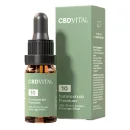
The classic, with a dropper. You can see exactly how many drops you take, and it offers the widest choice of strengths.
Right for you if you like flexibility and want to compare strengths.
💊
Capsule
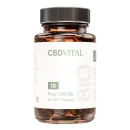
Always the same amount, no counting drops and no bitter taste. Easy to carry in a bag or take on holiday.
Right for you if you prefer things simple and tasteless.
🧴
Cream and skincare
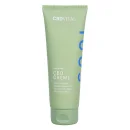
CBD as part of your skincare routine, from face cream to a cooling cream after exercise. Certified natural cosmetics.
Right for you if you would like to use CBD on your skin.
🍵
Tea
Hemp leaves as a herbal tea, a gentle introduction to the world of hemp and a nice ritual for an evening cup.
Right for you if you want to get to know hemp in a relaxed way.
Our picks to get started
Now you know what matters. These four products show what that looks like in practice: each with a clear content figure, a lab report and traceable origin.
Amounts as stated by the manufacturer. You will find the directions for use on each product page.
Three myths about CBD
Myth 1
"CBD gets you high."
Fact: The high comes from THC. The World Health Organization classes CBD as not psychoactive, and CBD products made from industrial hemp contain THC only in traces below the legal limit.
Myth 2
"CBD oil is the same as supermarket hemp oil."
Fact: Supermarket hemp seed oil is a cooking oil with virtually no CBD. CBD oil is made from an extract of leaves and flowers, dissolved in a carrier oil.
Myth 3
"CBD is a banned drug."
Fact: In 2020 the Court of Justice of the European Union ruled that CBD is not a narcotic. In Austria, hemp varieties with no more than 0.3 % THC fall outside the Narcotic Substances Act.
Worth knowing before you start
✓
Taking medication? Check first
CBD is broken down in the liver by the same enzymes as many medicines. If you take medication regularly, check before adding CBD rather than combining them quietly.
✓
Not meant for everyone
Pregnant and breastfeeding women, children and teenagers should not use CBD. Our manufacturers state this on their products too.
✓
Follow the manufacturer's directions
Every product has its own directions for use, printed on the pack and shown on our product page. Stick to them.
✓
Store it properly
CBD oil likes it dark, cool and tightly closed. In the fridge it may turn slightly cloudy, which clears again at room temperature.
No. In its 2018 review the World Health Organization concluded that CBD is not psychoactive and shows no potential for abuse or dependence. The intoxicating compound is THC, which CBD products from industrial hemp contain only in traces.
Is CBD legal in Austria?+
CBD is not a narcotic, as the Court of Justice of the European Union confirmed in 2020. Hemp varieties with no more than 0.3 % THC fall outside the Austrian Narcotic Substances Act. Each product type, such as skincare or oils, follows its own rules, and our manufacturers comply with them.
What is the difference between CBD oil and hemp oil?+
Hemp oil, or more precisely hemp seed oil, is pressed from the seeds and is a cooking oil with no meaningful CBD. CBD oil contains an extract of leaves and flowers dissolved in a carrier oil, which is often hemp seed oil.
What does 10 % on the bottle mean?+
A 10 ml bottle at 10 % contains around 1,000 mg of CBD. At roughly 20 drops per millilitre, that is about 5 mg per drop. The exact figure is always on the manufacturer's label.
Full spectrum or isolate: what is the difference?+
A full-spectrum extract contains other cannabinoids and terpenes from the plant alongside CBD, with THC in traces. Broad spectrum is the same without the THC. An isolate is pure CBD with no other plant compounds.
How should I store CBD oil?+
Dark, cool and tightly closed, ideally in its original amber glass bottle. If it turns slightly cloudy in the fridge, that is normal and it clears again at room temperature.
How do I recognise a good CBD product?+
By a lab report for every batch, the CBD content stated in milligrams, traceable origin, ideally from certified organic farming, and a gentle extraction method such as CO2 extraction.
What is the endocannabinoid system?+
A signalling network in the body made up of receptors (CB1 and CB2) and messenger molecules such as anandamide and 2-AG. It was discovered between 1988 and 1995 and named after the hemp plant, because researchers found it while studying hemp compounds.
In a nutshell
CBD is a non-intoxicating compound from industrial hemp with a fascinating research history. If you would like to try it, look for a lab report, traceable origin and a clear content figure, and follow the manufacturer's directions.
KEY TAKEAWAYS
CBD does not get you high; THC does.
Hemp seed oil is a cooking oil, CBD oil is an extract of leaves and flowers.
10 % in a 10 ml bottle means around 1,000 mg of CBD.
Lab report, organic origin and a milligram figure point to good quality.
Note: This page provides general information about hemp and CBD. It does not replace medical advice. Please follow the directions for use and the notes on each product. Sources include: WHO Expert Committee on Drug Dependence (2018), Court of Justice of the European Union, case C-663/18 (2020), ClinicalTrials.gov (accessed November 2026), Ren et al., Science Advances (2021).