

By Andreas | Viterna.at · Last updated: 26 August 2026 · Reading time: approx. 6 minutes
When someone asks us how to prepare for cold season, we rarely talk about vitamin C first. We talk about the gut. That surprises a lot of people. Yet around 70 % of all immune cells sit exactly there. In this article we explain what your gut has to do with your body's defences, what harms your gut flora, and how to rebuild it in about eight weeks. In good time, before the first waves of infections roll in come October.

Symbolic image: AI-generated
What does the gut have to do with the immune system?
Trillions of microorganisms live in your gut. Together they form the microbiome, a community that weighs up to two kilograms in an adult. And this microbiome can do a lot more than help with digestion.
The gut is your body's largest contact surface with the outside world. Its mucous membrane covers 30 to 40 square metres and comes into contact with everything you eat and drink, along with countless germs. That is exactly why nature stationed most of the immune system there: the so-called gut-associated immune system (experts call it GALT) includes around 70 % of all the immune cells in your body.

The gut bacteria themselves play two roles. First, they occupy the mucous membrane like a fully parked car park: there is simply no space left for unwanted germs. Second, they are in constant exchange with the immune cells and keep them in training. Think of it as a training camp that never takes a break.
In short: a diverse, well-kept gut flora is one of the foundations of a working immune defence.
What weakens your gut flora?
Your microbiome changes all the time, and a few things are particularly hard on it:
- Antibiotics. They remove not only harmful bacteria but also many useful ones. After a course of treatment, gut flora often needs weeks to months to recover.
- An unbalanced diet. Lots of fatty food, ready meals, white-flour pastries, cakes, sweets and fast food feed the wrong bacteria, and diversity declines.
- Too little fruit, vegetables and fibre. The good gut bacteria live on plant fibres. If these are missing from the menu, they get too little to feed on.
- Nicotine and alcohol. Both irritate the gut lining and shift the bacterial balance.
- Chronic stress and lack of sleep. The gut-brain axis works in both directions: persistent tension measurably changes the microbiome.
When several of these factors come together over a longer period, the balance in the gut gets out of step. The good news: gut flora can be rebuilt in a targeted way.
Why late summer, of all times?
Quite simply: because of the maths. Gut flora does not change overnight. It takes 8 to 12 weeks for new bacterial cultures to settle in and for a change of diet to take effect. Count back from the start of cold season in October and you land in August and September. Start now and you will head into exactly those weeks when the sniffles spread through offices and classrooms with a stable gut flora on your side.

Rebuilding your gut flora: your 8-week plan
1. Fibre: food for the good bacteria
Dietary fibre (also called prebiotics) consists of indigestible plant fibres that your useful gut bacteria feed on. At least 30 grams per day are recommended. Most of us do not even manage 20. Three small habits will get you a long way, without overhauling your whole diet.
- 1 tbsp of ground linseed daily in your muesli or yoghurt.
- Pulses twice a week: lentils, chickpeas or beans, straight from the jar is fine.
- Let potatoes or rice cool down. As they cool, so-called resistant starch forms, a preferred food of your gut bacteria. This works even if you reheat them afterwards. Yesterday's potato salad really is good for your gut.
Also rich in prebiotic fibre: onions, leek, garlic, chicory and Jerusalem artichoke. They all contain inulin, the same fibre that is added to many lactic acid bacteria supplements.
One important note: Increase the amount of fibre slowly. If you have eaten little of it so far, your gut first needs to get used to it, otherwise it will react with bloating at the beginning. That is normal and settles after a few days to weeks.
2. Fermented foods on your plate
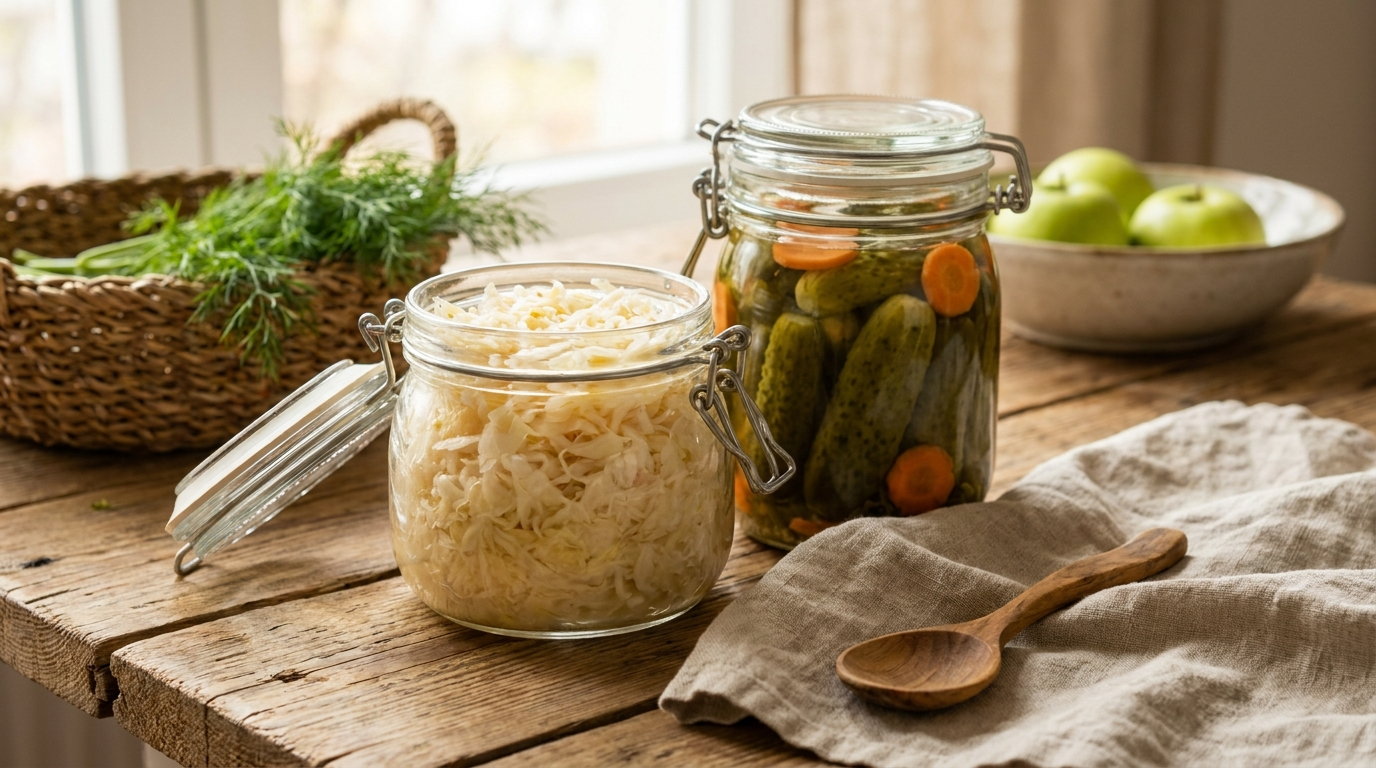
Lacto-fermented foods bring living lactic acid bacteria with them: raw sauerkraut (not pasteurised!), yoghurt with live cultures, kefir or kimchi. The rule here: small amounts regularly beat one big jar once a month.
Symbolic image: AI-generated
3. Lactic acid bacteria as a course
Many people supplement their diet with lactic acid bacteria cultures as a course, for example after antibiotics. To be honest: whether and how well such cultures settle in the gut has not yet been conclusively established scientifically, and the EU has not authorised any health claim for lactic acid bacteria so far. If you want to take a course, the choice of supplements is wide and so are the differences. What matters:
- Strains and diversity: There are highly dosed single strains such as Lactobacillus acidophilus DDS-1 as well as combinations of 10 or more strains. Both have their place.
- Colony-forming units (CFU): Typical daily doses range between 5 and 20 billion.
- Gastric acid resistance: The cultures need to survive the journey through stomach and bile acid, either through robust strains or a delayed-release capsule.
- Prebiotic included: Many supplements deliver the food (usually inulin) along with the bacteria.
- How to take them: As a course over 8 to 12 weeks, daily at the same time, with a glass of water. Many people take their capsules in the evening before bed, which makes them hardest to forget.
Matching products from our range: Optiolex Mikrobiom 13 with 13 bacterial strains plus inulin, the fermented organic herbal drink Vita Biosa Original Kräuter for everyone who dislikes capsules, and anatis Lactobac gut bacteria with highly dosed L. acidophilus DDS-1, hand-filled here in Austria. You will find the full selection in our lactic acid bacteria category.
4. And what should you cut back on?
The rebuild works faster if you reduce the factors listed above during these weeks: little sugar and soft drinks, alcohol only as an exception, ready meals swapped for fresh food. And as banal as it sounds: enough sleep and exercise in the fresh air have a measurable effect on the microbiome. The autumn walk counts too.

Symbolic image: AI-generated
Frequently asked questions about gut flora
How do I notice that my gut flora is out of balance?
Typical signs are bloating, a feeling of fullness or irregular digestion, for example after a course of antibiotics. Good to know: if you have just switched to a fibre-rich diet, bloating at the beginning is common too. That is a normal adjustment reaction, not a sign of disturbed gut flora, so increase fibre slowly. Persistent or severe complaints belong in a doctor's hands.
How long does it take to rebuild gut flora?
First changes show in the microbiome after just a few days. A stable rebuild, however, takes 8 to 12 weeks of consistent habits, and lactic acid bacteria cultures can be added as a supplement.
Can I take lactic acid bacteria permanently?
Lactic acid bacteria are foods and can also be consumed permanently. Taking them as a course over several weeks has proven itself, for example twice a year: in late summer before cold season and once again in spring. If you have a weakened immune system or a chronic condition, please discuss it with your doctor or pharmacist first.
What is the difference between lactic acid bacteria and prebiotics?
Lactic acid bacteria (often called "probiotics") are the living bacterial cultures themselves. Prebiotics such as inulin or resistant starch are the fibres these bacteria feed on. The two complement each other; some supplements therefore combine both as a "synbiotic".
Conclusion: start now, benefit in winter
Most of your immune system sits in your gut. And the gut can be tended like a garden: with the right food (fibre), good residents (lactic acid bacteria) and a portion of patience. Start in late summer and you have exactly the 8 to 12 weeks the rebuild needs before cold season arrives. The best time to start is therefore now.
More knowledge like this?
Every two weeks our newsletter explains a health topic like this one: clearly, with a tip for everyday life and matching recommendations from our range.
Note: This article is for general information and does not replace medical advice. Food supplements are no substitute for a balanced, varied diet and a healthy lifestyle.