

Pure aluminium at 40 ppm, dissolved as ions in double-distilled water
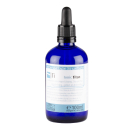
Ionic Colloidal Aluminium is a colloid in aqueous solution at 40 ppm at the time of production. It contains 99.98% pure aluminium in double-distilled water, made by proton resonance with no additives, in a 100 ml blue glass dropper bottle.
Window frames, bicycles, drinks cans and kitchen foil: few metals turn up in daily life as often as aluminium. It is the most abundant metal in the Earth's crust and the third most common element after oxygen and silicon. With the symbol Al and atomic number 13, it is a light metal, roughly a third of the weight of steel, and melts at around 660 °C. In nature it never occurs on its own but is bound in minerals, above all bauxite.
Ionic Colloidal Aluminium is made exclusively by proton resonance, not by electrolysis. The source material is strongly excited at its own resonance and then split off in an electrophysical process, with the desired particle size and charge, directly into distilled water. This brings the aluminium into colloidal form, and the quality of a colloid depends critically on how it is made. Proton resonance always produces the desired particle size and charge, while both are uncertain with electrolysis. In short, not every colloid is the same.
Purity runs through the whole Tec2Future Ionic line: only the element itself and high-purity distilled water.
🧪All colloids at a glanceSilver, gold, silicon, magnesium and many more Ionic colloids and colloidal oils by Tec2Future.View colloids →production
aluminium
dropper bottle
Use based on the quantum principle of entangled particles: place a small amount of a body fluid (e.g. saliva) or the body's own material (e.g. hair with root) into a vessel made of a natural material such as ceramic or glass. Then add approx. 10 drops of Ionic Al. Prepare fresh every day.
Name: Ionic Aluminium, colloid in aqueous solution
Ingredients: 99.98% pure aluminium in distilled water
Concentration: 40 ppm at production, dissolved in double-distilled water
Production: by proton resonance, made in Germany
Net quantity: 100 ml
What does "double-distilled" mean?
Double-distilled water has gone through distillation twice, leaving minerals, chlorine and organic residues behind. For an ionic metal solution this matters, because nothing in the water can react with the aluminium ions.
⚠️ Notes: For external use only. Do not use if you have a known intolerance to aluminium. Keep out of the reach of small children.
📦 Storage: Store at room temperature. Keep away from microwaves and strong magnetic fields. Protect from light. Do not shake.
💬 Frequently asked questions
🌿 Goes well with


Responsible person (GPSR, EU 2023/988) & manufacturer:
Tec2Future GmbH & Co. KG · St. Ulrichstr. 1 · 86825 Bad Wörishofen · Germany · info@Tec2Future.de
| Item information | Value |
|---|---|
| Content: | 0,10 l |


